
Carbon Monoxide Risks When Using Outdoor Heaters in Enclosed Spaces
It's a familiar British evening. The rain turns sideways, the barbecue is abandoned, and someone decides to drag the patio heater into the garage, or zip the gazebo shut and light the fire pit inside. Warmth arrives within minutes. So does a gas you cannot see, smell or taste.
Carbon monoxide is the reason fuel-burning heaters carry ventilation warnings. It causes deaths in Britain every year, and many of them happen in the places we think of as shelter: tents, garages, sheds, caravans, converted outbuildings, and gazebos with the sides drawn tight. The danger is not limited to old appliances or obvious faults. A perfectly normal patio heater, camping stove, charcoal barbecue or fire pit can produce lethal carbon monoxide when it burns in a space where the air cannot escape.
Outdoor heaters are designed for the open air. That phrase is not a marketing suggestion. It is a safety instruction. In an enclosed space, even a small fuel-burning appliance can use up oxygen and replace it with carbon monoxide. The gas binds to haemoglobin in the blood far more readily than oxygen, starving the heart, brain and muscles of the oxygen they need. You may feel warm and drowsy before you realise anything is wrong. That drowsiness is not comfort. It can be the first stage of poisoning.
Why Enclosed Spaces Turn a Patio Heater Into a Hazard
Combustion needs fuel, oxygen and a way for exhaust gases to leave. A patio heater in a garage may have fuel and oxygen, but it often lacks proper exhaust. Carbon monoxide builds up silently. A gazebo with four zipped sides behaves like a tent. A shed with the door closed is a small room. A carport with a still, damp evening and no breeze can trap fumes near the ground. The tighter the space and the longer the burn, the faster the concentration rises.
Different appliances carry different risks. A gas patio heater may burn relatively cleanly in perfect conditions, but a blocked burner, a damaged hose, a loose regulator or a drop in oxygen can change that. A paraffin heater can produce CO and also fine particles. A charcoal barbecue or fire pit is never safe indoors, in a tent, or in a garage, even after the flames seem to have died down. Embers can continue to produce carbon monoxide for hours. Camping stoves are often the worst offenders because they are small, portable, and easy to use inside a tent when the weather turns.
It is also worth remembering that carbon monoxide is not the only risk. Fuel-burning appliances in enclosed spaces also produce carbon dioxide, nitrogen dioxide and water vapour. They can cause headaches, breathing problems and condensation. But carbon monoxide is the quietest and most deadly. It gives no smell, no colour and no taste. You cannot judge the air by how it feels.
The Early Warning Signs You Might Miss
Carbon monoxide poisoning is often mistaken for flu, a hangover, food poisoning or simple tiredness. That is one of the reasons it is so dangerous. The symptoms can come on gradually, and people may blame the weather, a long week or one too many drinks.
- Headache: often the first sign, and easily dismissed as tension or dehydration.
- Dizziness and light-headedness: you may feel unsteady or need to sit down.
- Nausea or vomiting: sometimes mistaken for a stomach bug.
- Shortness of breath: especially on exertion, even when you are otherwise fit.
- Chest pain or palpitations: the heart is struggling for oxygen.
- Confusion, drowsiness or difficulty concentrating: a dangerous stage, because you may not think clearly enough to leave.
- Loss of consciousness: this can happen without warning and can be fatal.
Children, older people, pregnant women, and anyone with heart or lung conditions may be affected more quickly. Pets and animals are also highly vulnerable because they are smaller and often closer to the floor, where some gases can accumulate. If everyone in the same enclosed space develops a headache at the same time, or if symptoms improve when you go outside, suspect carbon monoxide immediately.
If you suspect carbon monoxide, do not wait for a diagnosis. Get everyone into fresh air, leave the appliance alone, and call 999 from a safe place.
How Quickly Can It Happen?
Faster than most people expect. In a sealed tent, a smouldering charcoal barbecue can produce dangerous levels of carbon monoxide within minutes. A gas camping stove used to take the chill off can do the same. In a garage, a patio heater running while the door is closed can raise levels steadily over an evening. A gazebo with the sides down and no ventilation can trap fumes around a table where people are eating, talking and slowly becoming unwell.
There is no safe way to guess how long is too long. The concentration depends on the appliance, the fuel, the size of the space, the amount of ventilation, the weather and the condition of the burner. A small leak or a poor flame can make a huge difference. Even if you have used the same heater in the same way before and felt fine, that is not evidence that it is safe. Carbon monoxide exposure is cumulative, and the next occasion may be the one that overwhelms you.
Practical Rules for Safer Evenings Outdoors
The simplest rule is also the most important: never use outdoor fuel-burning appliances indoors or in any enclosed space. That includes garages, sheds, conservatories, tents, caravans, campervans, gazebos with sides, and even a carport with no airflow.
- Keep fuel-burning heaters outside. Use them only in open air, well away from doors, windows and vents.
- Never use a barbecue or fire pit indoors. This includes cooling embers. They can still produce carbon monoxide.
- Do not rely on a window or door being open. A partially open door is not proper ventilation and can create backdraughts that pull fumes into the room.
- Check equipment before use. Look for damaged hoses, cracked seals, rust, blocked burners and incorrect regulators. If in doubt, do not use it.
- Use electric heaters in enclosed spaces. Electric patio heaters, infrared lamps and heated blankets do not produce carbon monoxide at the point of use.
- Install carbon monoxide alarms where fuel is burned. In a home, fit audible CO alarms near sleeping areas and fuel-burning appliances. For camping, consider a portable CO alarm, but remember it is a backup, not a licence to use a stove in a tent.
- Know the signs and act fast. If anyone feels unwell, switch off the appliance if it is safe, open doors and windows, and get outside.
It is also wise to keep vents and flues clear, service fuel-burning appliances regularly, and never use an outdoor heater to dry clothes indoors. A heater covered with fabric can overheat, and the fabric itself can become a fire risk. The same goes for using a patio heater under an awning or parasol that is too close to the burner.
What to Do If You Suspect Carbon Monoxide
If you think someone has been exposed to carbon monoxide, act immediately. Do not search the house for the source first. Do not open windows and then sit back down. Do not assume you will feel better in a minute.
- Get everyone into fresh air. Move outside or to an open, well-ventilated place.
- Call 999. Tell the operator that you suspect carbon monoxide poisoning. Say whether anyone is drowsy, confused or unconscious.
- Do not re-enter the enclosed space. Leave the appliance where it is until it is safe and has been checked by a competent person.
- Seek medical advice even if symptoms improve. Carbon monoxide can cause delayed effects, and a proper assessment may be needed.
- Do not use the appliance again until it has been inspected and the cause has been found.
If you are in a tent or gazebo and someone becomes unwell, get them outside and keep them warm. Do not light another stove to keep them warm. Use blankets, sleeping bags or an electric source only if it is safe and properly powered.
A Better Way to Stay Warm
The British weather will always tempt us to improvise. But warmth is not worth a silent, invisible risk. If the rain is coming in sideways, choose a different plan: move indoors with electric heating, use blankets and hot drinks, or accept that the outdoor gathering is over. A fire pit can be lovely on a clear night, but only in the open air and only when it is properly maintained. A patio heater can take the edge off a cool evening, but only outside, with plenty of ventilation and no roof or walls trapping the exhaust.
Carbon monoxide does not announce itself. It does not smell of gas or smoke. It does not care that you are only trying to keep your friends warm. The safest outdoor heater is the one that stays outdoors. If the space is enclosed, the fuel-burning appliance should not be there at all.
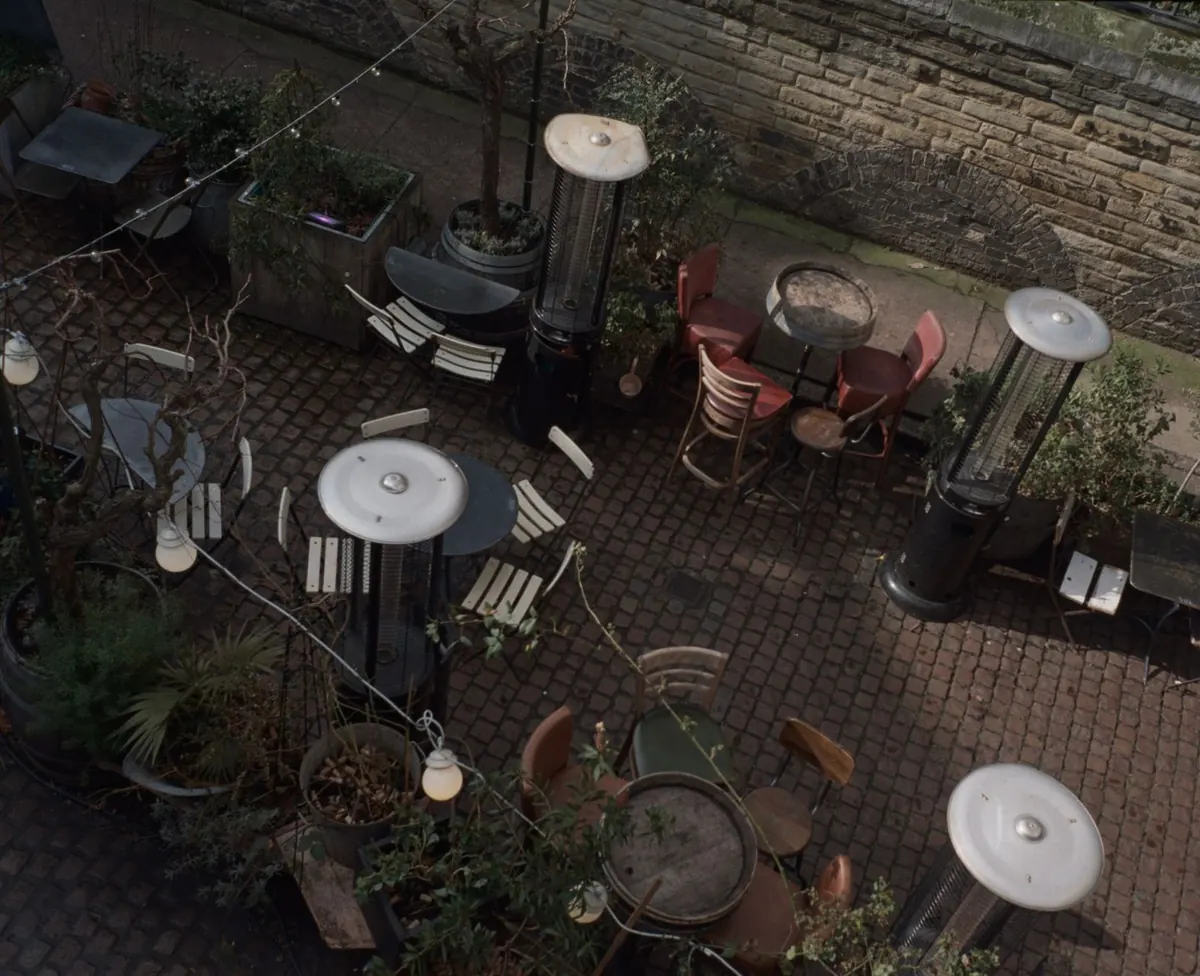
Photo: Polina Chistyakova / Pexels