
Bank holiday weekends have their own rhythm. Friday evening feels generous, Saturday starts with good intentions, and by Sunday afternoon someone is hunting through the shed for the charcoal chimney while the sausages sit hopefully on a plate. The gap between a relaxed three days of outdoor cooking and a scrappy one is usually preparation — an hour or so on the Thursday or Friday before anything hits the grill.
This checklist covers the four things that actually matter: cleaning, stocking, weatherproofing and setting up a cooking area that is safe to work in when the garden is full of people.
Start with the grill itself
Everything else is scenery. If the barbecue is dirty, the whole weekend tastes of last summer's burnt onions. Give it a proper clean, not a theatrical scrub with a brush that sheds bristles into the grate.
Charcoal barbecues
- Tip old ash into a metal bucket. Never straight into a plastic bin, and never while there is any chance of a live ember hiding in it.
- Scrape the grate with a stiff brush, wash it, then wipe with oil so the first round of food releases cleanly.
- Check the vents and ash pan for rust. A seized vent makes temperature control a fight you will lose.
- If the kettle has stood outside uncovered all winter, empty the base completely and check the legs and handle fixings.
Gas barbecues
- Lift out the grates and heat plates and scrape the firebox. Grease build-up is what produces those sudden towers of black smoke.
- Clear blocked burner ports with a pin or a cocktail stick. Uneven flames mean uneven cooking.
- Inspect the hose for cracking or perishing, and run a leak test with soapy water at every joint. Bubbles mean stop and sort it before you cook. Never test for leaks with a flame.
- Weigh the cylinder or fit a spare. A warm Sunday afternoon is the worst possible moment to discover you are running on fumes.
Build a proper prep station
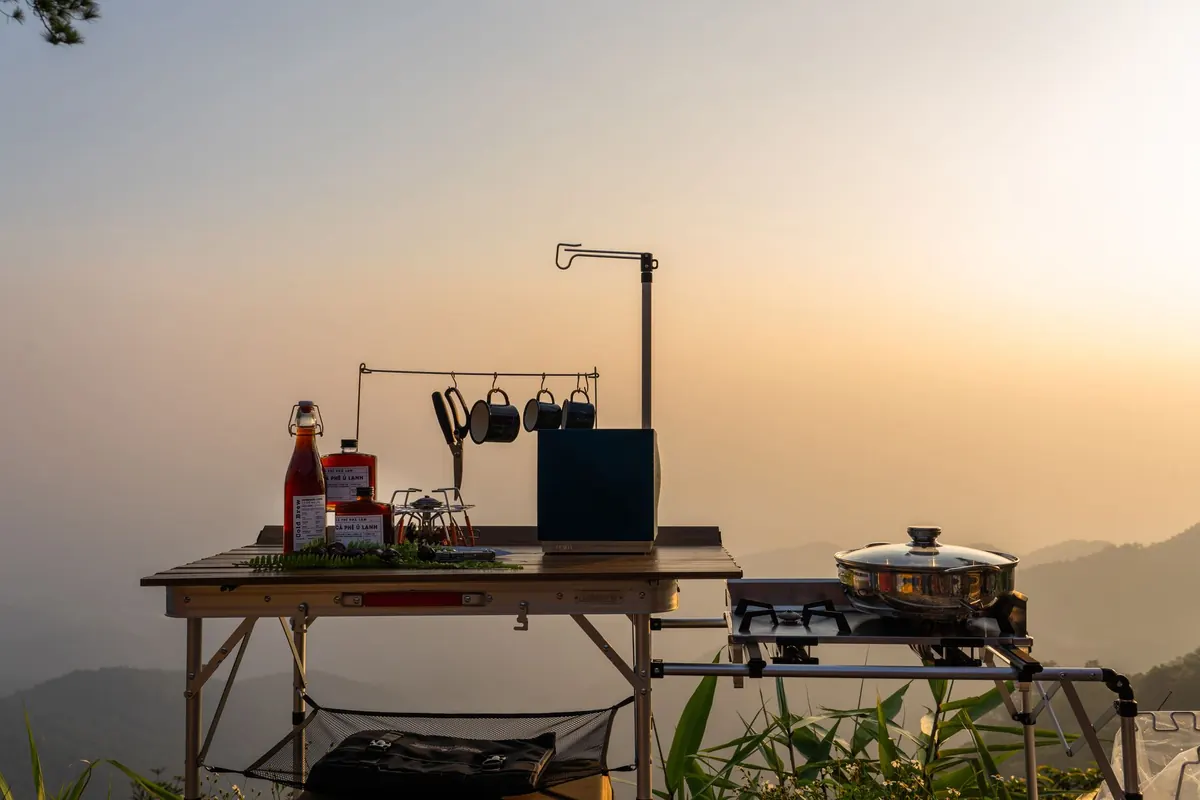
An outdoor kitchen is really just a fire with a work surface near it, and the work surface is where most of the chaos happens. Aim for a clear metre of space either side of the grill, at roughly hip height. A folding table does the job well. A tray balanced on a garden chair does not.
Think about the route as well. Can you carry a full pan, a plate and a cold drink from the kitchen to the grill without stepping over a hose, a paddling pool or a hopeful spaniel? Move what needs moving now, rather than with your hands full.
- Tongs, spatula, long-handled fork and heatproof gloves.
- One tray for raw meat going out, one clean plate for cooked meat coming back. Two, not one.
- Kitchen roll, a bin bag and a small bin within arm's reach.
- A probe thermometer if you are cooking chicken, burgers or anything on the bone.
- A jug of water and a spray bottle for flare-ups on charcoal, and the lid ready for a gas grill.
Separate plates for raw and cooked food is the easiest safety habit at the grill — and the first one dropped when a queue starts forming.
Stock up before you shop
Go through the cupboard before you write a list, or you will come home with a fourth bottle of barbecue sauce and no fuel. Fuel is the item people consistently underestimate: a long afternoon of cooking uses far more charcoal than a single meal, so buy more than you think you need. For gas, a spare cylinder in the shed removes the entire problem.
Beyond meat and vegetables, these are the things that send people back to the kitchen mid-cook.
- Ice, plus frozen blocks for the cool box.
- Oil and a brush, or a halved onion for cleaning a hot grate.
- Salt, pepper and something sharp — lemon, vinegar, a decent pickle — for finishing.
- Foil, a chopping board and a knife that lives outside for the weekend.
- Bread or flatbreads, which fill gaps better than any side salad.
Weatherproof for a British bank holiday
Plan for rain, then plan for sunburn. Wind is the quiet troublemaker: it steals heat, throws ash across the patio and tips lightweight tables. A windbreak, a sheltered corner or a heavier table solves most of it.
What you must not do is move the cooking under cover. Never use a barbecue indoors, in a garage, in a tent or under a gazebo roof or awning. Burning charcoal and gas both produce carbon monoxide, which is invisible and genuinely dangerous in any enclosed or roofed space. Keep the grill out in the open, clear of fences, sheds, overhanging branches, dry grass and anything else that will catch.
For rain, check that your cover still fits and has not gone brittle. Never cover a barbecue while it is still warm — you will trap heat and moisture and pay for it in rust. For sun, think about shade for the cook and for the food, because a plate of mayonnaise in direct August glare is nobody's friend.
A five-minute safety walk-round
- Grill on level, stable ground, well away from anything flammable and never under cover.
- Gas: cylinder upright, hose not kinked or touching hot parts, joints tight and leak-tested.
- Charcoal: dry fuel stored somewhere sensible, a metal bucket for ash, and coals left to cool completely — usually overnight — before they go anywhere near a bin.
- Food: raw meat covered and kept cool, cooked food out of the sun, and nothing sitting around for hours on a warm afternoon.
- Hands: soap and water or hand gel beside the grill, so you are not handling cooked food with raw-meat hands.
- Know where the lid, the gas knobs and the fire blanket are before you need them.
The night-before routine
An hour on Friday buys you three easy days. Marinate anything that benefits from it — overnight is better anyway — and put it straight in the fridge. Defrost frozen food in the fridge rather than on the worktop. Chill the drinks, dig out the serving dishes, and decide your rain plan now instead of improvising with a brolly in one hand.
If you are feeding a crowd, portion meat onto trays ready to carry out, and chop vegetables into containers. Anything that removes a decision from Saturday afternoon is worth doing on Friday.
Small effort, long weekend
If you only do three things, do these: clean the grill properly, buy more fuel than you think you need, and set up a clear prep station with two separate trays. Everything else is a bonus that makes the weekend quieter.
Then close the shed door, pour something cold, and let the cooking be the easy part. The ash can wait until Tuesday.
Photo: Lam Kiên / Pexels