
Autumn in the UK doesn't arrive all at once. One week you're eating outside in short sleeves; the next, the sun drops behind the hedge at half seven and everyone's hands are wrapped around a mug for warmth. You don't have to retreat indoors the moment the temperature dips. The trick isn't buying the biggest heater you can find and pointing it at the patio. It's layering warmth: a little on the person, a little against the wind, and only then a little in the air around you.
Layer Warmth in the Right Order
An autumn evening outside is three problems wearing a coat. People get cold because they're sitting still. Wind strips away whatever warmth is left. And the air itself is cool, which is the most expensive part of the job to fix.
So work in that order. A blanket costs nothing to run. A screen or a repositioned table costs nothing after the first weekend. A heater costs money for every hour it's on, which is why it belongs last — aimed at the two or three square metres where your guests are actually sitting, not at the whole garden.
Warm the People Before You Warm the Air
Cold starts at the feet, the hands and the back of the neck, and it starts with whichever guest is too polite to mention it. Deal with it before anyone notices.
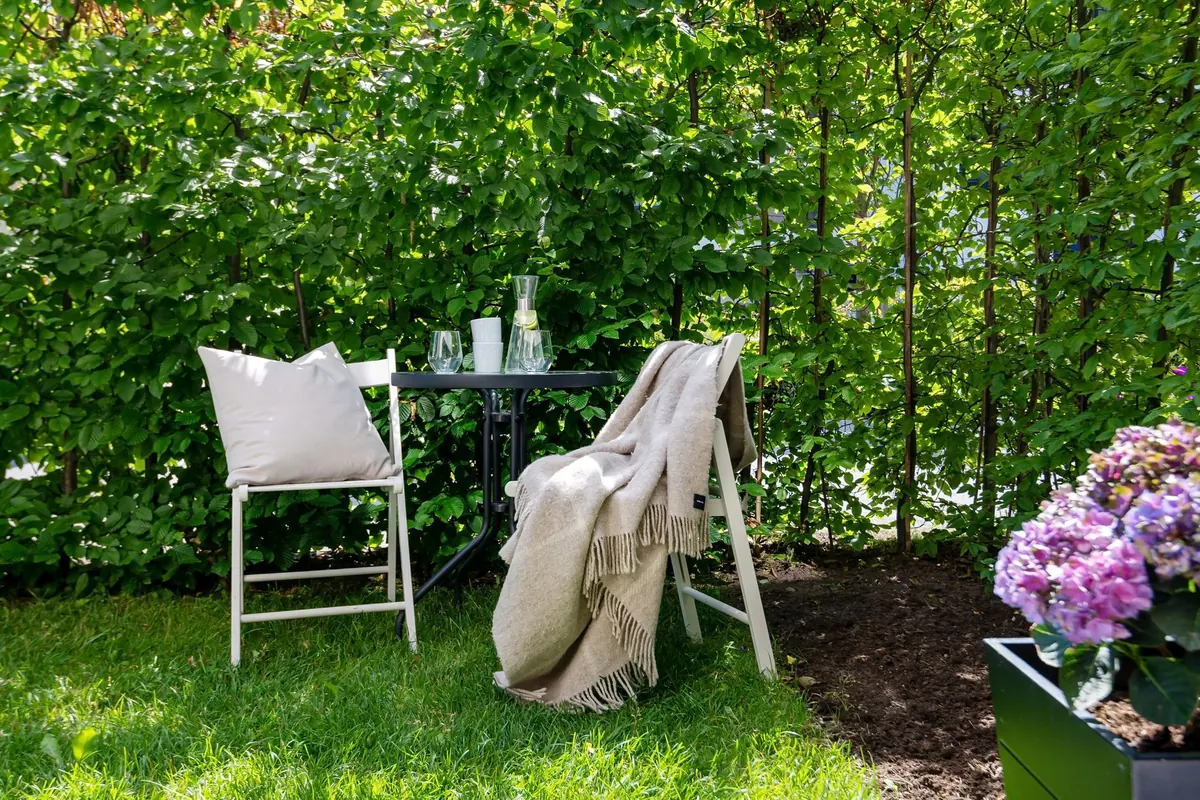
- Keep a basket of blankets by the back door and tell people to help themselves when they arrive, not when they're already shivering. Wool, or a wool-rich mix, holds warmth far better than a thin synthetic throw.
- Store them in a lidded waterproof box so they stay dry and don't smell of damp.
- Put something between feet and cold paving — a rug, a decking mat, or even a sheet of insulation board under the chairs.
- Seat pads and a throw over the back of each chair let guests add a layer without getting up.
- Fill two or three hot water bottles before people arrive and tuck them into the basket. They are the cheapest warm thing you own.
Block the Wind Before You Light Anything
Wind is what turns a pleasant twelve degrees into a miserable one. If you do only one thing this autumn, do this: move the seating into the corner already sheltered by a wall, fence or hedge, and put something solid between your guests and the prevailing wind.
- Side panels for a gazebo or pergola, clipped on the windward side only. Leave the rest open so the space doesn't feel like a box.
- A weighted windbreak or woven willow screen, moved round as the wind shifts.
- Tall planters with bamboo, or a trellis with an evergreen climber. Slower to establish, but it works every year without being put away.
- A parasol with a half-panel, angled to take the edge off the breeze.
Whatever you choose, keep one side open. If you're burning gas, charcoal or wood, you want air moving through the space, never sealed in around you.
Fire Pits and Chimineas: Radiant Warmth and a Bit of Theatre
A fire pit throws heat in a straight line. It warms the people and surfaces it can see, which is why a group sitting two metres away is comfortable while someone on the far side of the table is still in a coat. Arrange chairs in an arc rather than a full ring, and sit closer together than you would in July.
Burn dry, seasoned hardwood. Kiln-dried logs light easily, burn hot and produce far less smoke than damp softwood — and smoke drives people indoors faster than cold does. Don't overfill it: a modest, well-aerated fire gives more usable heat than a smothered pile of logs. With children, dogs or dry grass about, use a spark screen, and keep the pit clear of overhanging branches, fences and anything fabric.
One rule matters more than the rest: never use a fire pit, chiminea or charcoal burner indoors, in a tent, or in a gazebo with the sides closed. Burning fuel produces carbon monoxide, which you cannot see or smell.
Patio Heaters: What Each Type Does Well
Electric infrared
Directional and instant. Infrared warms people and objects rather than the air, so it keeps working when there's a breeze — provided it's pointed at the seating and not over everyone's heads. Many plug-in models draw close to the limit of a standard UK socket, so use one heater per socket, an outdoor-rated extension lead with an RCD, and never run several from one supply.
Gas patio heaters
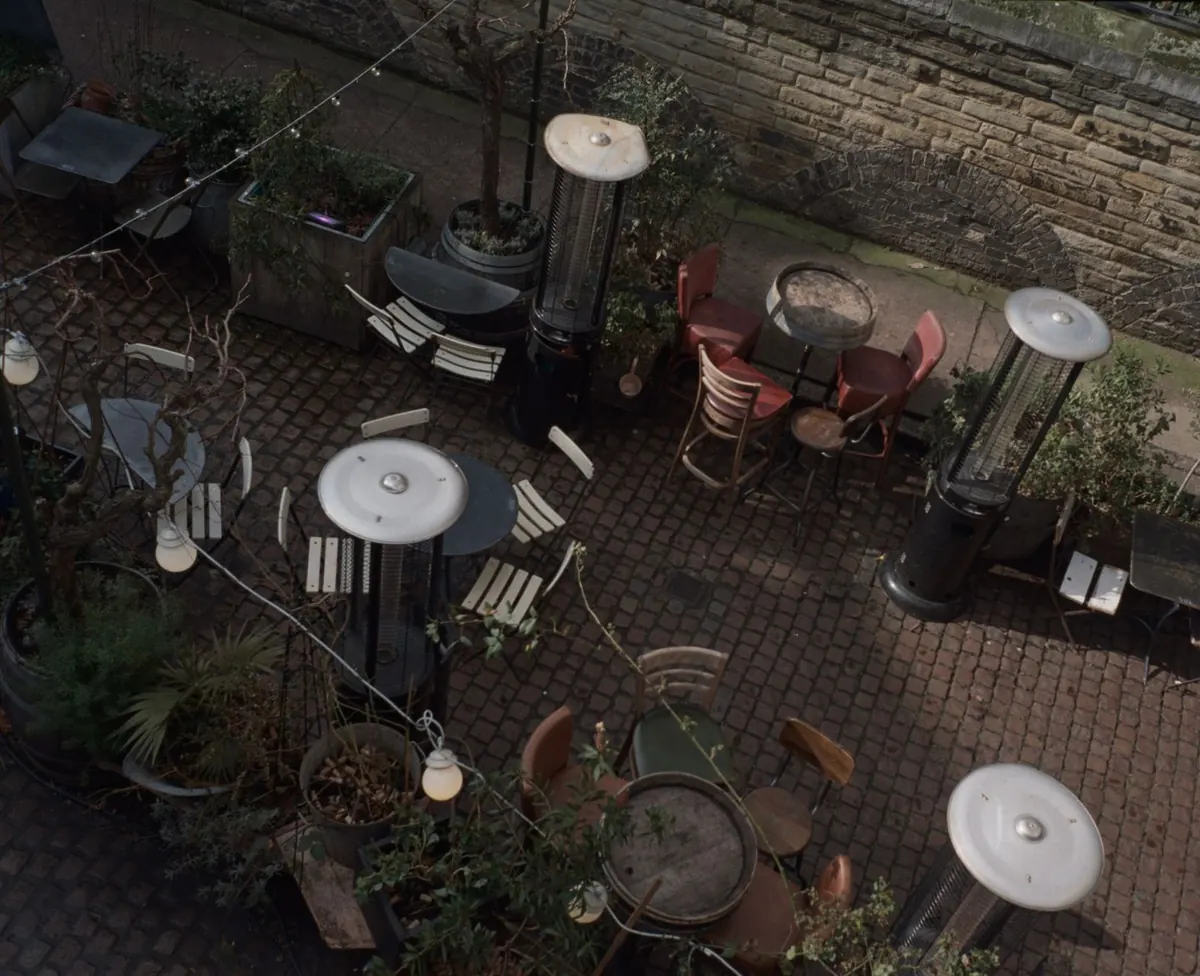
A tall mushroom heater warms a wider area, but it's at its best in still air, and a good deal of the heat rises past shoulder height. Pair one with a screen and it earns its place. These run on bottled gas and produce water vapour and carbon monoxide, so they must never be used in an enclosed space. Store cylinders upright and outside, turn the gas off at the cylinder when you're done, and have the appliance checked by a Gas Safe registered engineer if anything seems wrong.
Low-level and tabletop models
Cold starts in the legs, so a small heater angled down at knee height often feels better than a tall unit blowing warm air over your head. Tabletop versions suit four people around a small table.
A Layered Setup for a Chilly Saturday
- Check wind speed and direction as well as temperature. Wind decides where you sit.
- Move the table to the most sheltered corner and arrange chairs in a shallow arc facing the fire pit or heater.
- Clip screens on the windward side and leave the rest open.
- Light the fire pit thirty to forty minutes before guests arrive, so the furniture and paving have warmed through.
- Set out the blanket basket, the hot water bottles and a lantern or two.
- Switch the heater on when people actually sit down, and point it at them.
- Serve hot food mid-evening, when the temperature falls fastest. Warm plates and a lidded dish do more than you'd expect.
- Have an indoor fallback ready — a cleared table, a warm room, a kettle on. Knowing it's there makes staying out longer easier.
Staying Safe and Sensible
Use the cheap warmth first and save the heater for the last hour or two. A thermostat, a timer plug, or simply switching off when the conversation moves indoors will all trim the running cost without spoiling the evening.
At the end of the night, let a fire pit burn down or douse it properly, and put the ash into a metal container rather than the wheelie bin. Turn gas off at the cylinder. Unplug electric heaters and store them under a cover once they're cool and dry. If anyone becomes headachy, dizzy or drowsy near a gas or solid-fuel heater, get them into fresh air straight away and seek medical advice if
Photo: Lisa Anna / Pexels