
There's a moment most outdoor cooks recognise. The oven is roaring, the dough is stretched, the toppings are piled on, and the pizza goes in looking magnificent. Ninety seconds later it comes out with a scorched base, a raw centre and cheese sliding off the front edge. The oven usually isn't to blame. It's one of a handful of habits that are simple to fix once you know what you're looking for.
None of these mistakes cost money to correct. Most come down to patience, restraint and paying attention to temperature. Here are the ones that trip people up most often in a backyard pizza oven.
Under-Hydrating the Dough, Then Baking It Cold
A dough that's too dry is stiff, fights back when you stretch it, and bakes up more like a biscuit than a pizza base. It also tears at the worst possible moment, usually as you're sliding it off the peel. As a rough working range, 58–62% water relative to the flour weight is comfortable for hand-stretching, while doughs heading towards 65% and beyond give a lighter, puffier rim if you're using a strong bread flour and are confident with a slack dough.
Flour choice matters here. A flour with higher protein absorbs more water, so the same 62% hydration can feel sticky with a weak flour and perfectly manageable with a strong one. Add about 2% salt by flour weight, mix until the dough is smooth rather than shaggy, and give it time. A slow rise in the fridge overnight, followed by an hour or two at room temperature, develops far more flavour than a quick warm rise.
Temperature is the part people skip. Dough straight from the fridge will resist stretching, spring back, and bake unevenly. Aim for dough at roughly 20–22°C before you shape it. If it's cold, leave it covered on the worktop until it relaxes.
Baking Before the Stone Has Soaked Up the Heat
A hot dome is not the same as a hot stone. Wood-fired ovens need a good half hour or more of burning before the floor is properly charged, and gas ovens need a similar period on full blast with the door closed. Load a pizza too early and you get a pale, floppy base with blackened blisters on top.
Floor and dome are two different readings
An infrared thermometer aimed at the stone is the single most useful tool you can buy for this. Built-in dials usually report the air or dome temperature, which tells you very little about what's happening under the base. As a general guide, a floor somewhere between 300°C and 400°C covers most backyard ovens: hotter gives a fast 60–90 second bake, cooler suits a more forgiving three-minute bake. Much above that and the base will char before the middle has set.
Overloading the Toppings
This is the mistake that ruins more pizzas than any other, and it's almost always caused by enthusiasm. A heavy pizza steams instead of bakes. Water comes out of the vegetables and mozzarella, pools in the middle, and the base underneath turns soggy.
- Wet mozzarella. Tear it and leave it in a sieve to drain, pat it dry, and use less than you think you need.
- Too much sauce. A thin layer is enough. If you can see sauce sitting on top of the cheese, you've overdone it.
- Raw watery vegetables. Courgette, aubergine and mushrooms should be sliced thinly and pre-cooked or salted and drained first.
- Stacked cured meats. A few slices spread out will crisp; a heap will steam and go greasy.
- Cheese on top of everything. A final scattering over a loaded pizza can trap moisture rather than let it escape.
If you remember one rule, make it this: the pizza should never be busier than the rim.
Battling the Peel Instead of Working With It
A pizza that sticks to the peel is a pizza you'll end up folding into a calzone on the oven floor. Dust the peel with semolina or a half-and-half mix of semolina and fine flour, and shake it after every single topping you add. If the dough doesn't slide freely, lift an edge and blow gently underneath, or use a bench scraper to loosen it.
Keep the process quick. Don't assemble a topped pizza and leave it sitting while you pour a drink. If you're making several, shape and top each one only when the oven is free, and keep the peel dry between launches.
Forgetting the Fire Between Bakes
You want a small, lively flame licking across the dome, not a raging fire rolling over the top of the pizza. Once the oven is up to temperature, push the logs to one side, sweep excess ash out of the way with a brass brush, and add a small split log every two or three pizzas to keep the heat steady.
The floor also cools each time you open the door. After every bake, give the stone a minute to recover before the next one goes in. Rushing this is why the first pizza of the evening is always the best and the fifth is a disappointment.
Treating the Dough Like Pastry
A rolling pin presses out the gas you spent hours developing, giving a flat, dense base. Pricking the dough with a fork does much the same. Stretch it instead, working from the centre outwards with your fingertips and leaving the outer centimetre or so untouched so it can puff into a proper rim. If the dough springs back stubbornly, cover it and walk away for ten minutes. It will relax.
The Pre-Bake Check That Saves a Pizza
Before anything goes near the oven, run through this quickly. It takes seconds and prevents most ruined bakes.
- Read the stone with an infrared thermometer, not the dome dial.
- Check the dough is at room temperature and stretches without tearing.
- Drain the mozzarella and pat any wet toppings dry.
- Dust the peel, and shake it after each topping goes on.
- Have a turning peel and a small split log within reach.
- Set a timer rather than guessing — bakes are short.
Start with a plain margherita until you can produce a crisp base and a properly cooked top every time. Add one or two toppings after that, not five. The best pizzas from a backyard oven are usually the simplest ones, made by someone who has learned to wait for the stone to be ready.
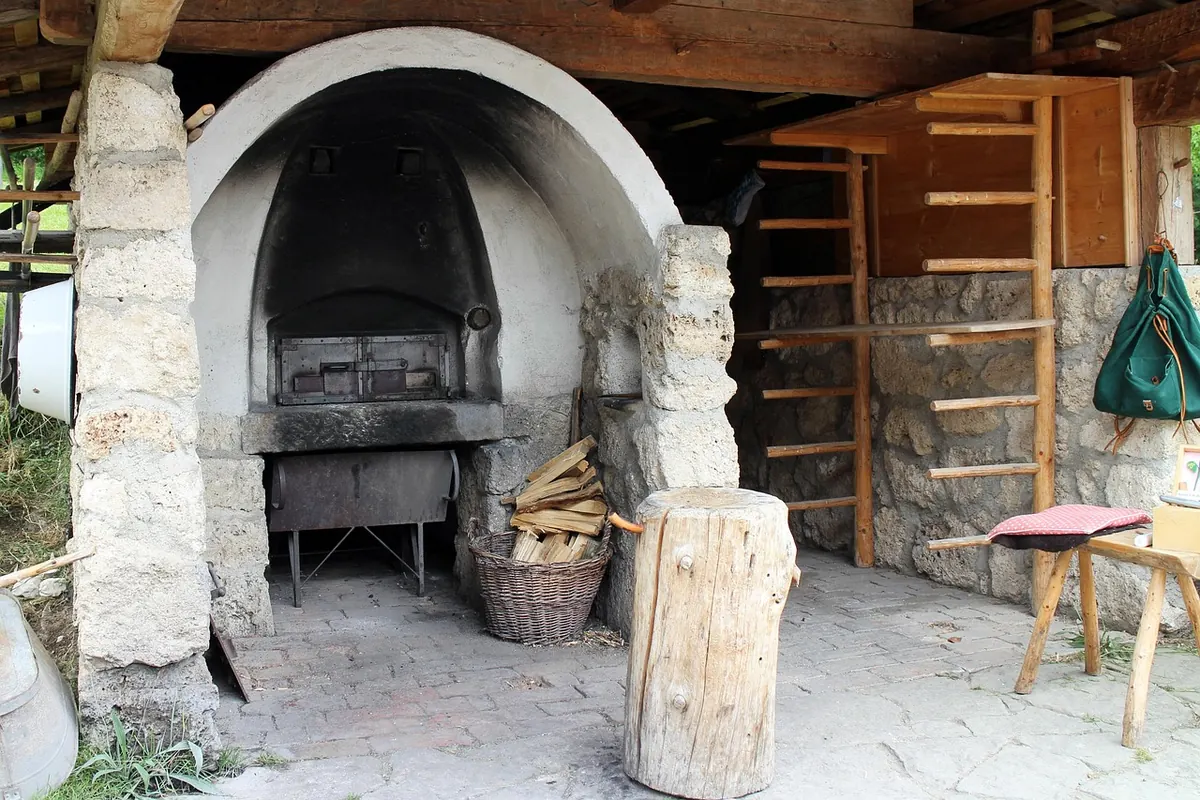
Photo: Antranias / Pixabay