
You can spend a fortune on a fire pit and still have a disappointing first evening, because the fuel shapes the night far more than the bowl it burns in. It decides how often you're up topping it up, whether smoke follows you round the garden, how much warmth reaches your knees, and what an evening costs. Logs, charcoal, gas and eco pellets all earn their place in a British garden. Here's how they compare.
Wood logs: warmth, smell and a bit of graft
Kiln-dried hardwood is the benchmark. Look for logs with a moisture content under 20 per cent, and the Ready to Burn logo is the simplest way to check that in the UK. Ash, oak, beech and birch all burn well. Softwoods such as pine go up quickly and throw sparks, so they're better for getting a fire started than for keeping it in.
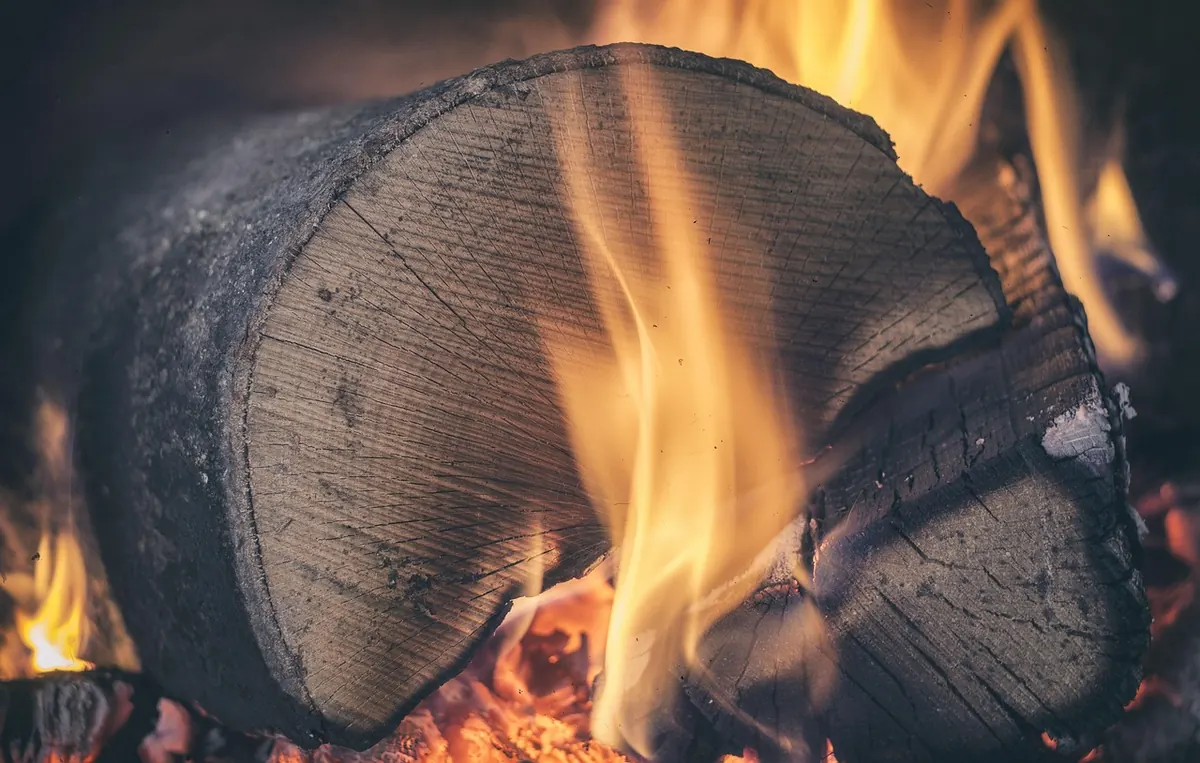
A couple of decent hardwood logs on a good bed of embers will give you roughly 45 minutes to an hour of flame, then a glowing bed you can sit with for longer. The heat is radiant, warming what it faces rather than the air around it. Smoke is the real variable. Dry wood in a well-ventilated pit produces very little; damp wood or a smothered fire produces plenty, and there's no way to fix that once it's away.
Getting the most from logs
- Stack loosely with gaps for air, building upwards rather than piling on.
- Never burn treated, painted or unknown scrap timber. It releases things you don't want to breathe.
- Buy in bulk in spring or summer when merchants are quiet, then store it under cover with airflow around it.
- Keep a bucket of water or sand nearby, and let ash cool completely before bagging it.
Charcoal: fierce heat, shorter evenings
Lumpwood charcoal lights quickly and burns hotter than wood, which makes it excellent for cooking over. A fire pit with a grill grate becomes a proper outdoor kitchen. Briquettes burn longer and more evenly than lumpwood, though some contain binders and produce more ash.
The catch is duration. A load of charcoal gives you around an hour of serious heat before it fades, and it doesn't reward you with the slow ember glow that logs do. It's also the most expensive way to keep a fire going for hours, so most people treat it as a cooking fuel rather than a heating one. Lighting it in a chimney starter, with a couple of firelighters underneath, keeps the smoky stage short and saves you standing in the worst of it.
Gas: instant control, no smoke, no ash
A gas fire pit runs on propane or butane, sold as patio gas in refillable cylinders. Propane suits a British garden better, because it keeps vapourising in the cold where butane struggles as temperatures approach freezing. You get a tap to turn down, no ash, no sparks on a dry lawn, and nothing to feed.
What you lose is atmosphere. Gas flames are pale and warm the air more than your legs, so people tend to sit closer. Running costs are modest on a low setting and climb quickly at full tilt, and the cylinder empties accordingly.
Treat the gas side with respect. Store cylinders upright outdoors, check hoses and regulators for cracking, and test connections with soapy water rather than a flame. Never run a gas fire pit in a garage, conservatory or any other enclosed space.
Eco pellets: steady, tidy, quietly capable
Eco pellets are compressed sawdust, usually a by-product of sawmills, with a moisture content far lower than even good kiln-dried logs. They burn hot and clean with very little smoke and a small amount of ash, and they store easily in a sack in the shed. You do need the right hardware: a pellet basket or a fire pit designed for them, because loose pellets need contained airflow to burn properly.
Heat is steady rather than dramatic, and topping up is a scoop rather than a log. Pellets swell as they burn, so leave headroom and don't overfill. Buy plain wood pellets meant for stoves or fire pits, and avoid anything with added oils or flavourings unless you're deliberately cooking. Availability has improved a lot, but it's still more of a specialist purchase than a bag of logs from the garage.
Side by side: what changes between fuels
- Burn time: logs give the longest sit-around fire; briquettes are steadier than lumpwood but shorter than logs; pellets burn slowly in a basket; gas lasts as long as the cylinder.
- Heat: charcoal is the most intense, logs give the best radiant warmth, pellets are steady, gas is controllable but less focused.
- Smoke: gas is smokeless, dry logs and pellets are low-smoke, charcoal smokes mainly while lighting, and damp wood is the worst offender.
- Cost: judge it per hour of usable warmth, not per bag. Bulk logs and pellets usually work out best for long evenings, charcoal is the priciest per hour, and gas sits in the middle depending on how high you run it.
- UK availability: logs and charcoal are everywhere from spring to autumn, patio gas refills are widely stocked, and pellets are easiest online or from stove shops.
Choosing the right fuel for your garden
Match the fuel to the evening you actually have. For long, sociable nights with the smell of wood smoke, buy kiln-dried hardwood in bulk and learn to build a loose fire. If you cook over the flames, keep charcoal on hand and treat wood as the backup. If smoke is unwelcome, whether that's a small terrace, a built-up area or a smoke control area, gas or pellets will keep you out
Photo: Pexels / Pixabay